The history of Korean popular music can be traced back to 1885 when an American missionary,
Henry Appenzeller, began teaching American and British folk songs at a school.
These songs were called changga (창가; 唱歌),
and they were typically based on a popular Western melody sung with Korean lyrics.
For example, the song "Oh My Darling, Clementine" became known as Simcheongga (심청가; 沈淸歌).
[note 1] During the Japanese colonial period (1910-1945),
the popularity of changga songs rose as Koreans expressed their feelings against
Japanese oppression through music. One of the most popular songs was Huimangga (희망가; 希望歌).
The Japanese confiscated the existingc hangga collections and
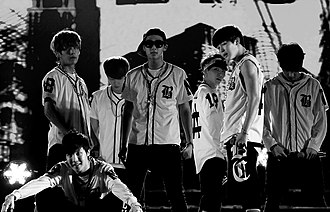
published lyrics books of their own.[65]K-pop was represented by H.O.T in the early days,
and it was mostly fanatical, flashy, and showed the rebellious psychology of young people
in the emotional aspects. Most of the songs are relatively fast-paced and have a strong sense
of rhythm, which is suitable for dancing. They often sing and dance when they perform,
and the choreography urbanance is a very important factor in popularity.[66] The first
known Korean pop album was I Pungjin Sewol (이 풍진 세월; 이 風塵 歲月; lit. This Tumultuous Time),
by Park Chae-seon and Lee Ryu-saek in 1925, which contained popular songs translated from Japanese.
The first pop song written by a Korean composer is thought to be Nakhwayusu (낙화유수; 落花流水; lit.
Fallen Blossoms on Running Water) sung by Lee Jeong-suk in 1929.[65] In the mid-1920s, Japanese
composer Masao Koga mixed traditional Korean music with Gospel music that American Evangelists
introduced in the 1870s. This type of music became known as Enka in Japan, and later in Korea
developed into Trot (트로트; teuroteu; t'ŭrot'ŭ).[67][68] In the 1930s singers such as Wang Su-bok,
Lee Eun-pa and the Jeogori Sisters popularised folk music further.[69]